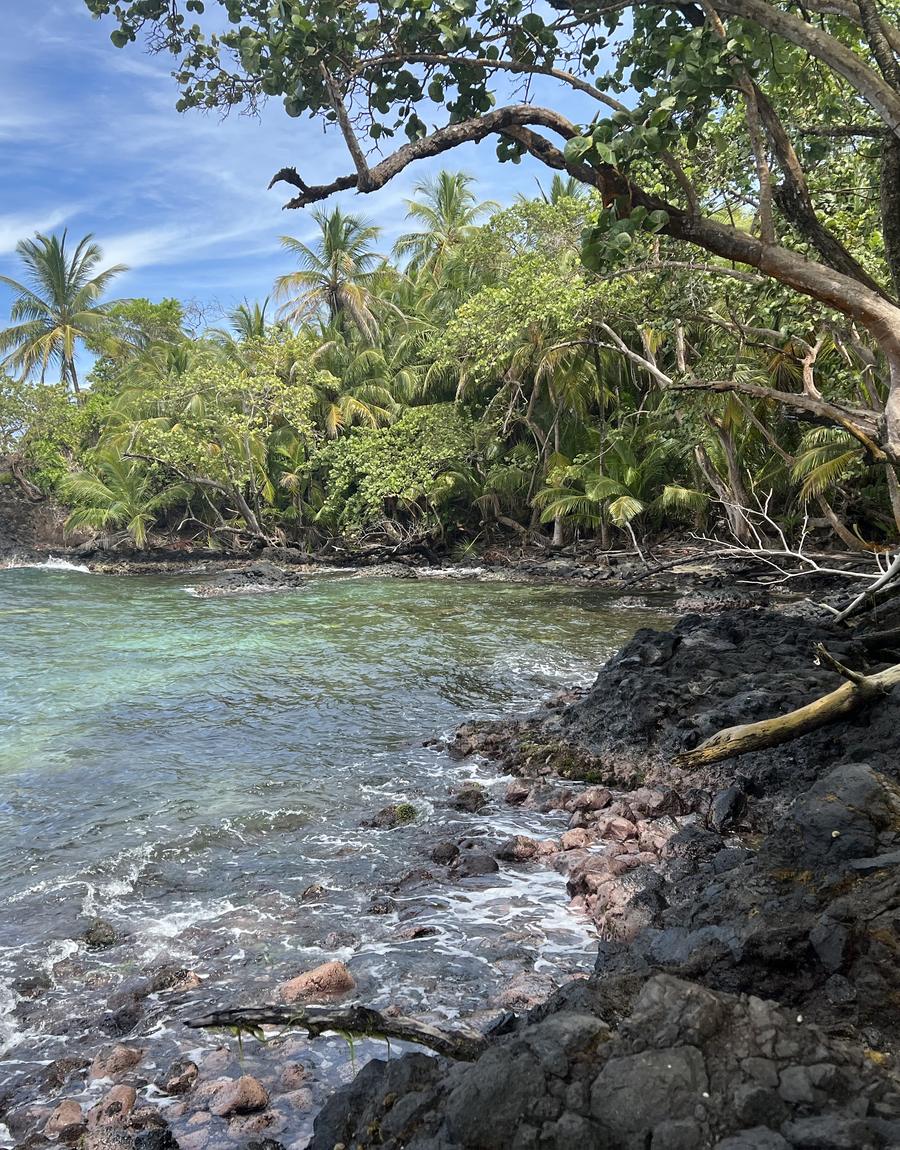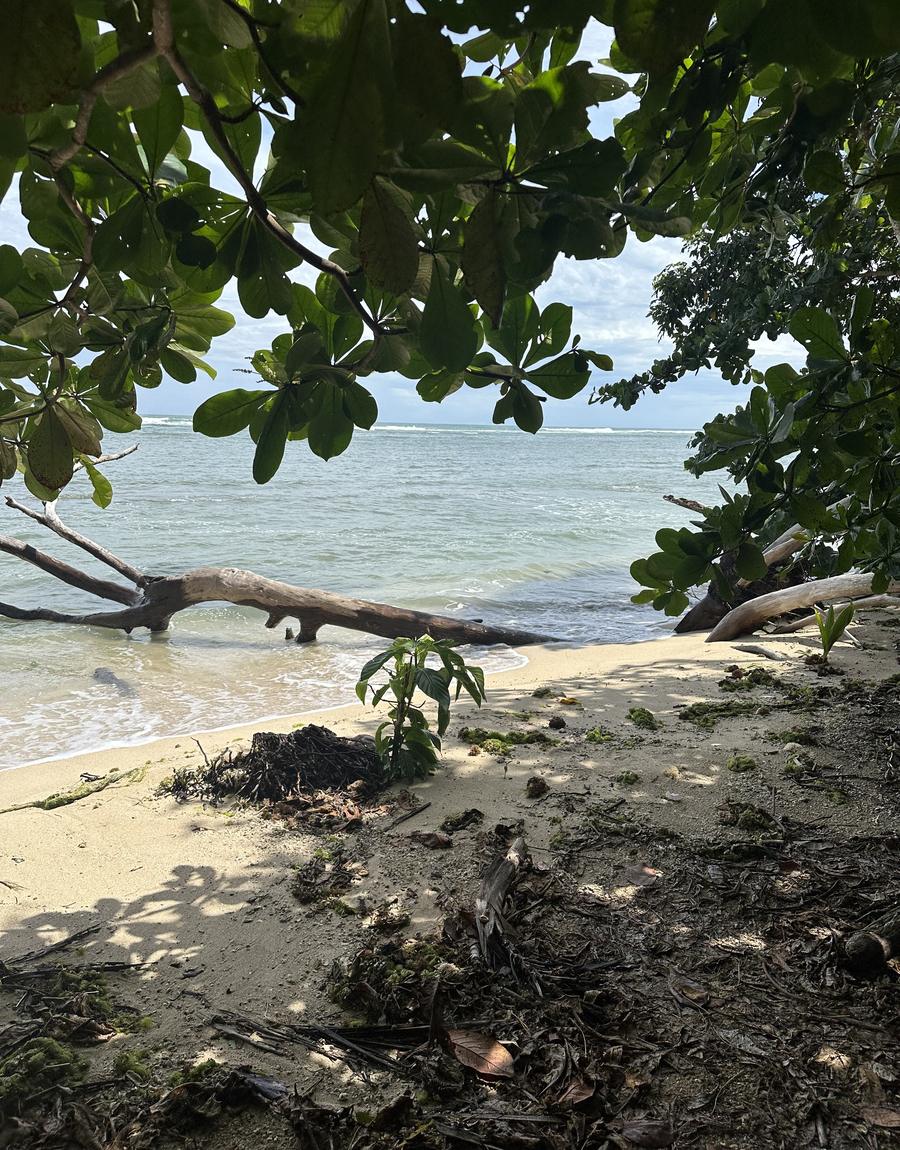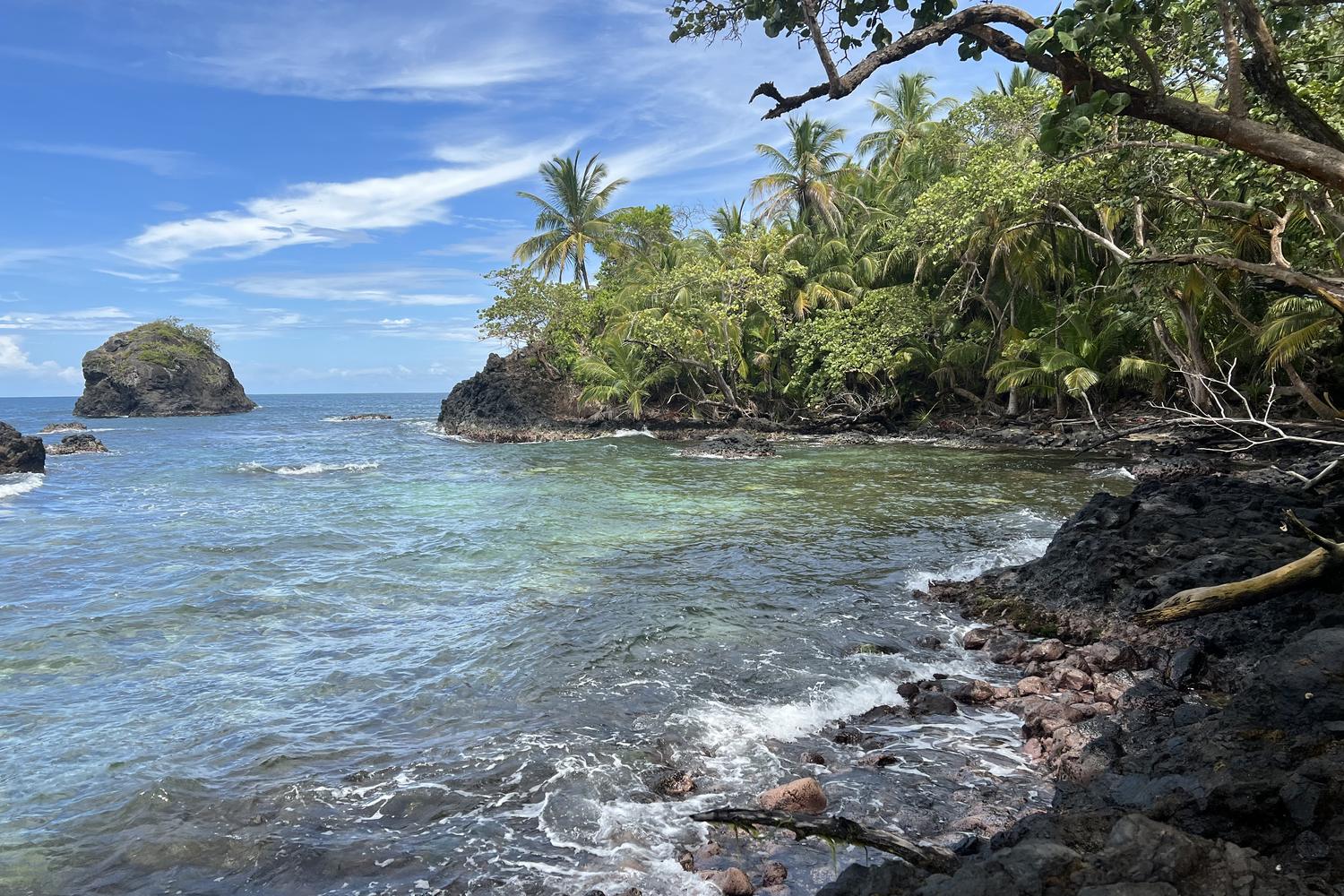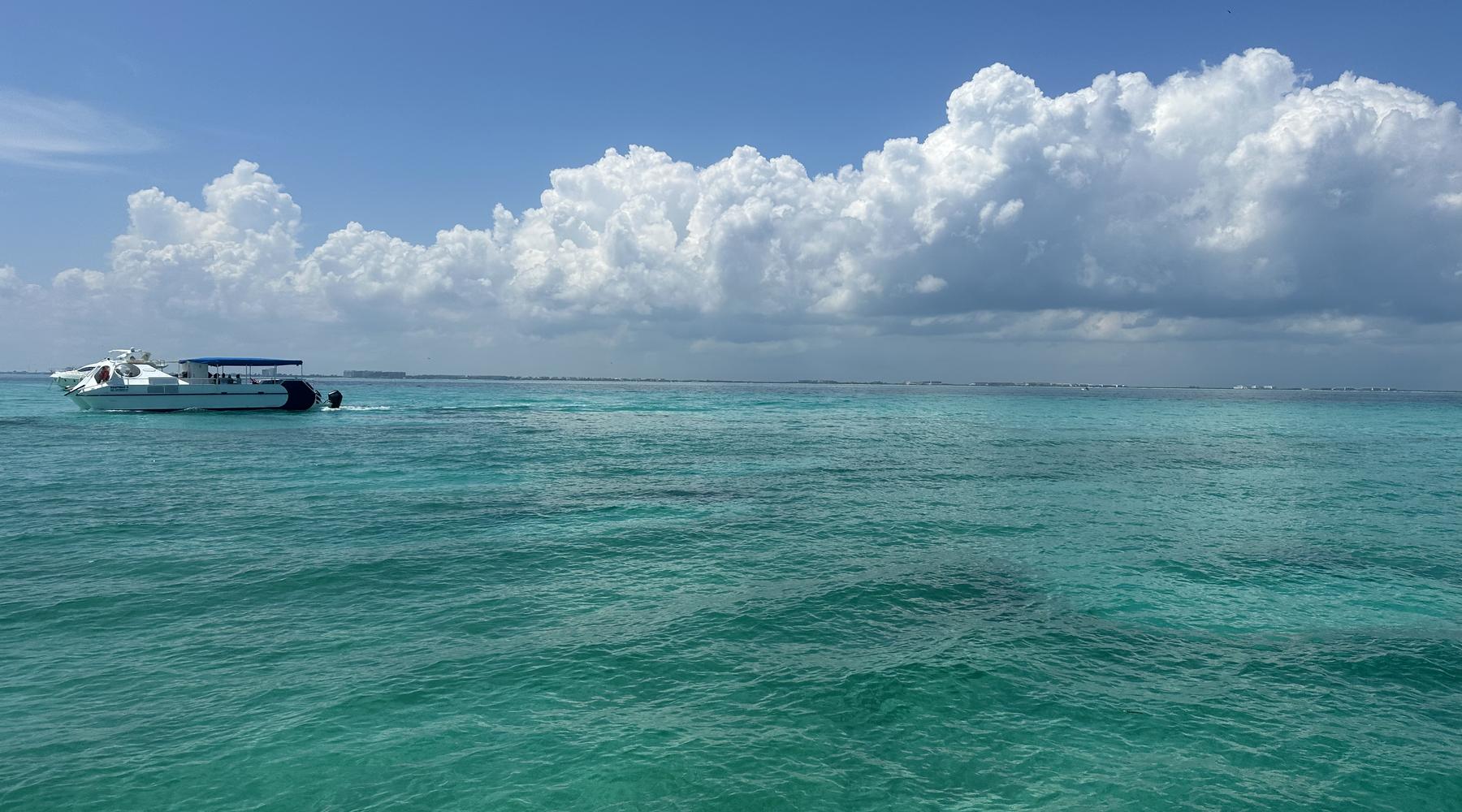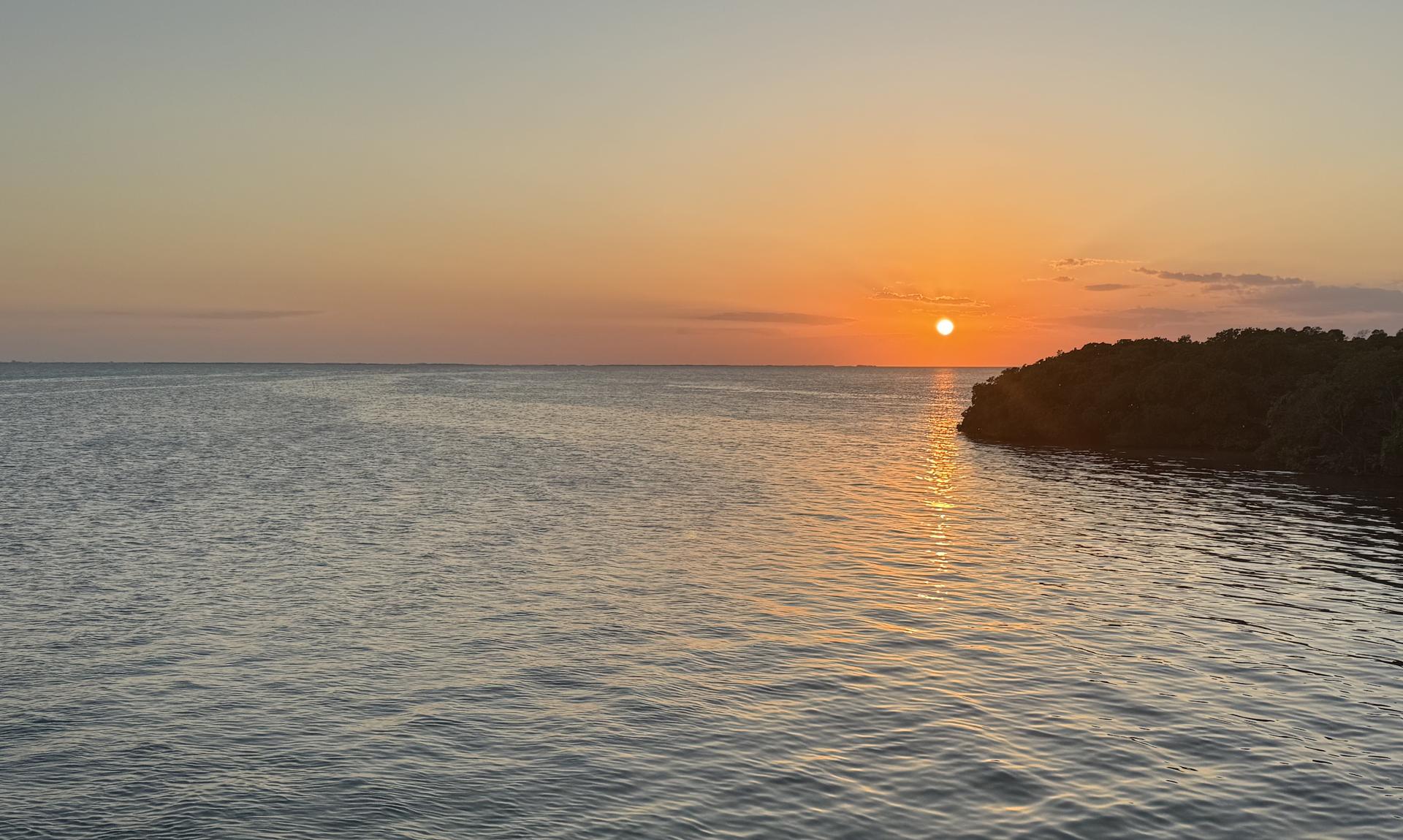
We show the title status, survey and water-taxi time on every property, and our Panamanian counsel walks qualifying buyers through residency. Fewer listings, better ones.
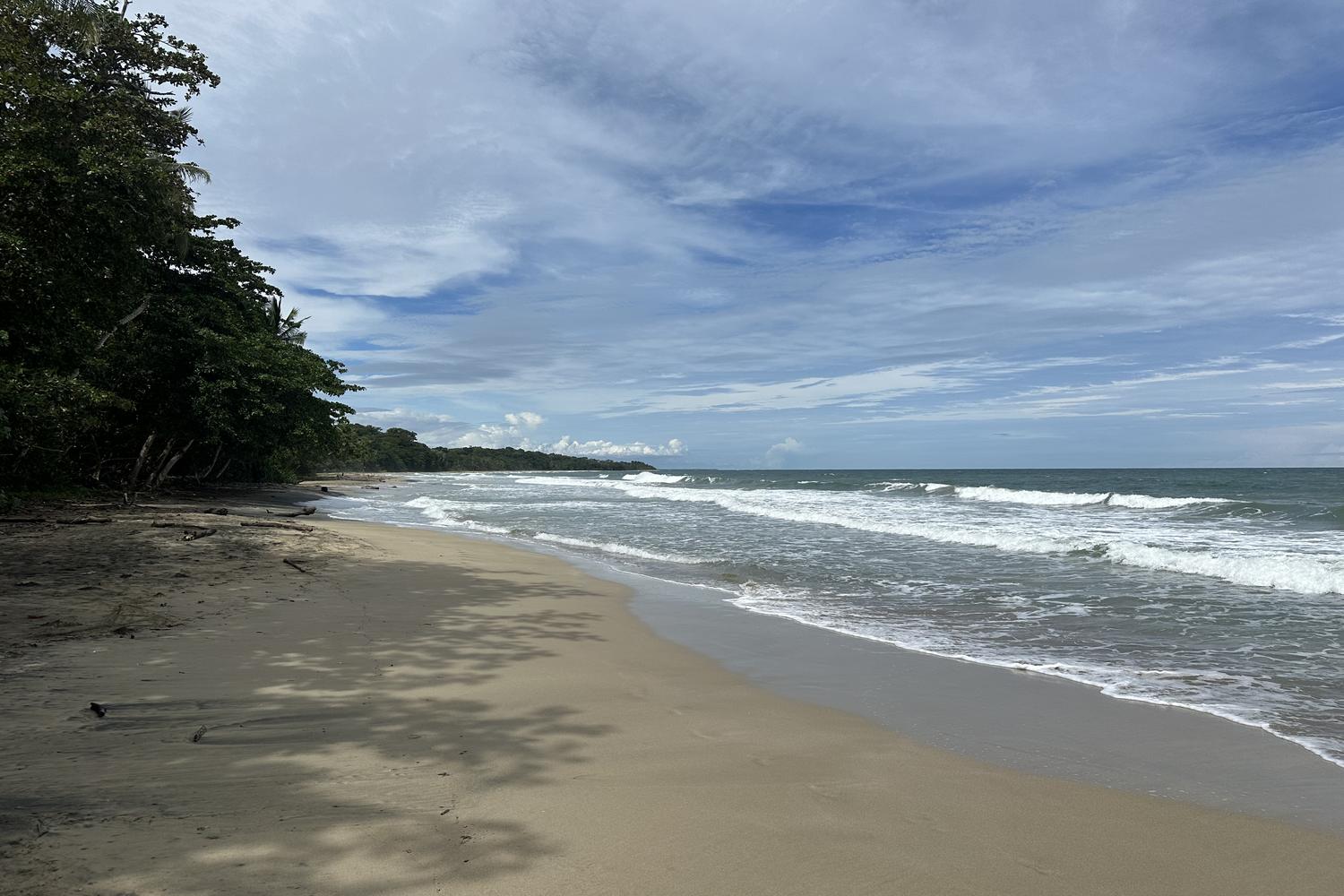


Tile roof, deep verandah, and forty metres of lawn between the door and the sand. Grid power since 2023, rain catchment for the garden. Title registered, survey matches the fence line — and it qualifies for the Qualified Investor residency route.


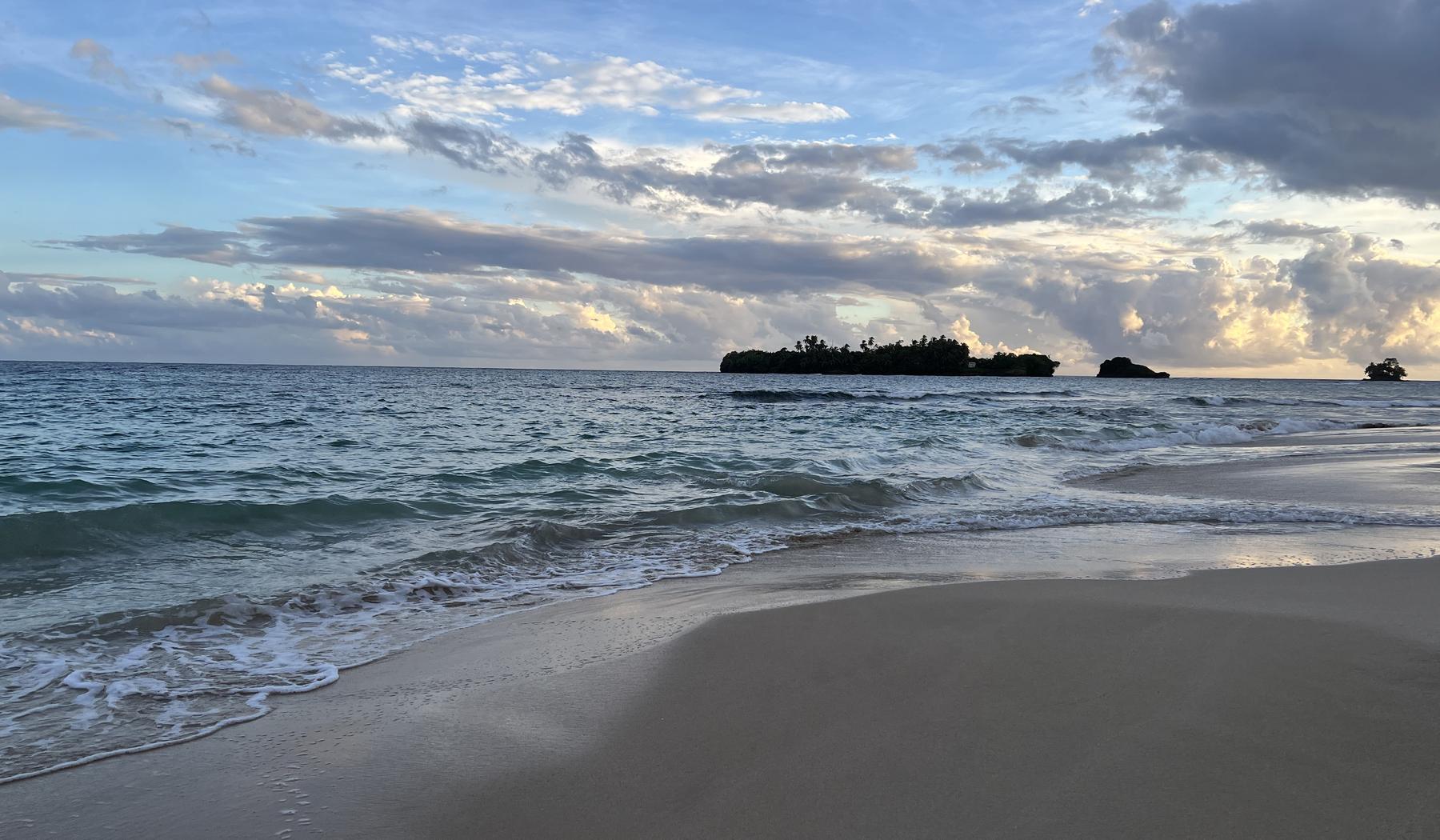
There are no bridges between the islands. Every property has a dock or a landing, and its distance from town is measured in minutes of open water, not kilometres — so we put that figure on every listing.
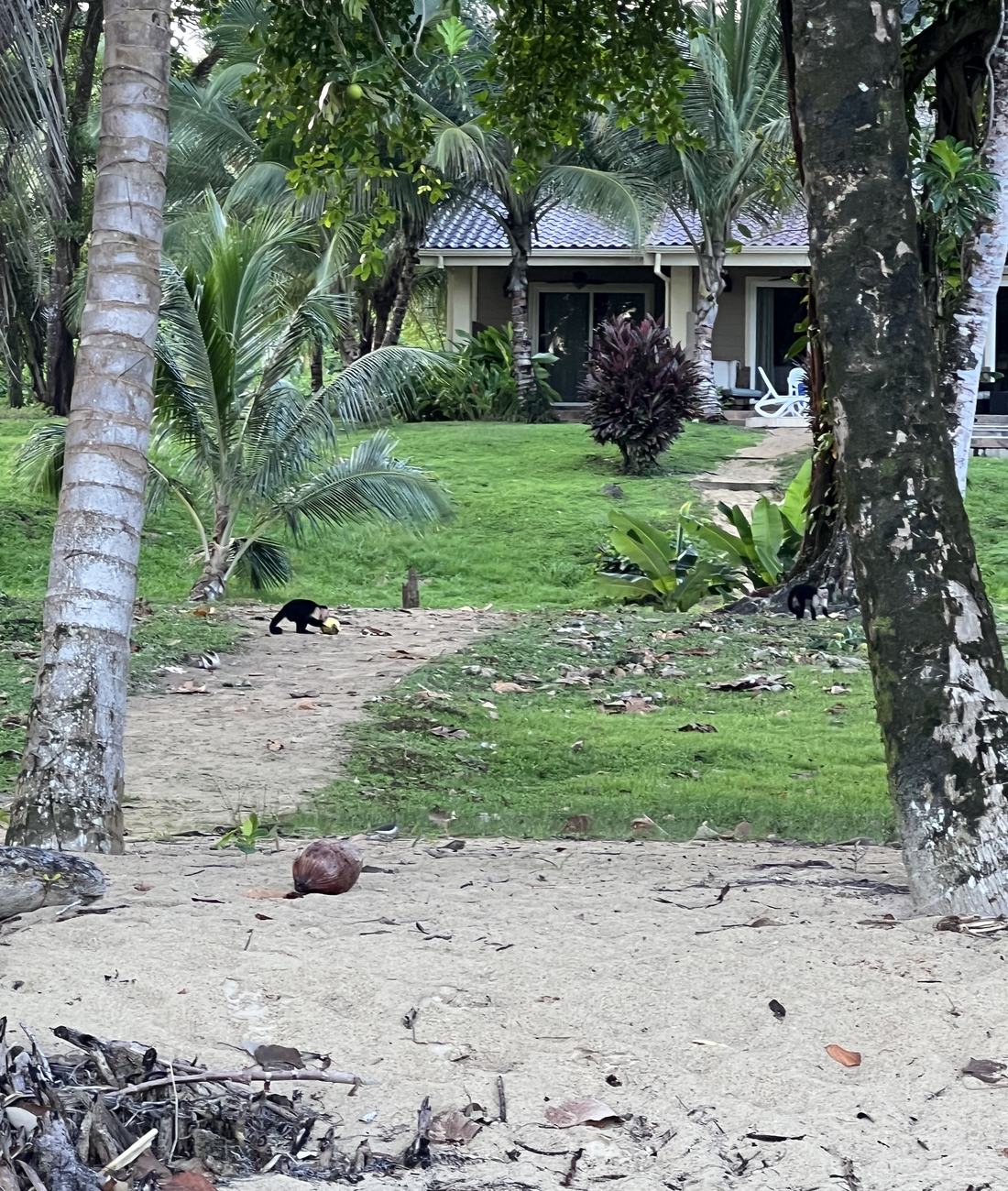
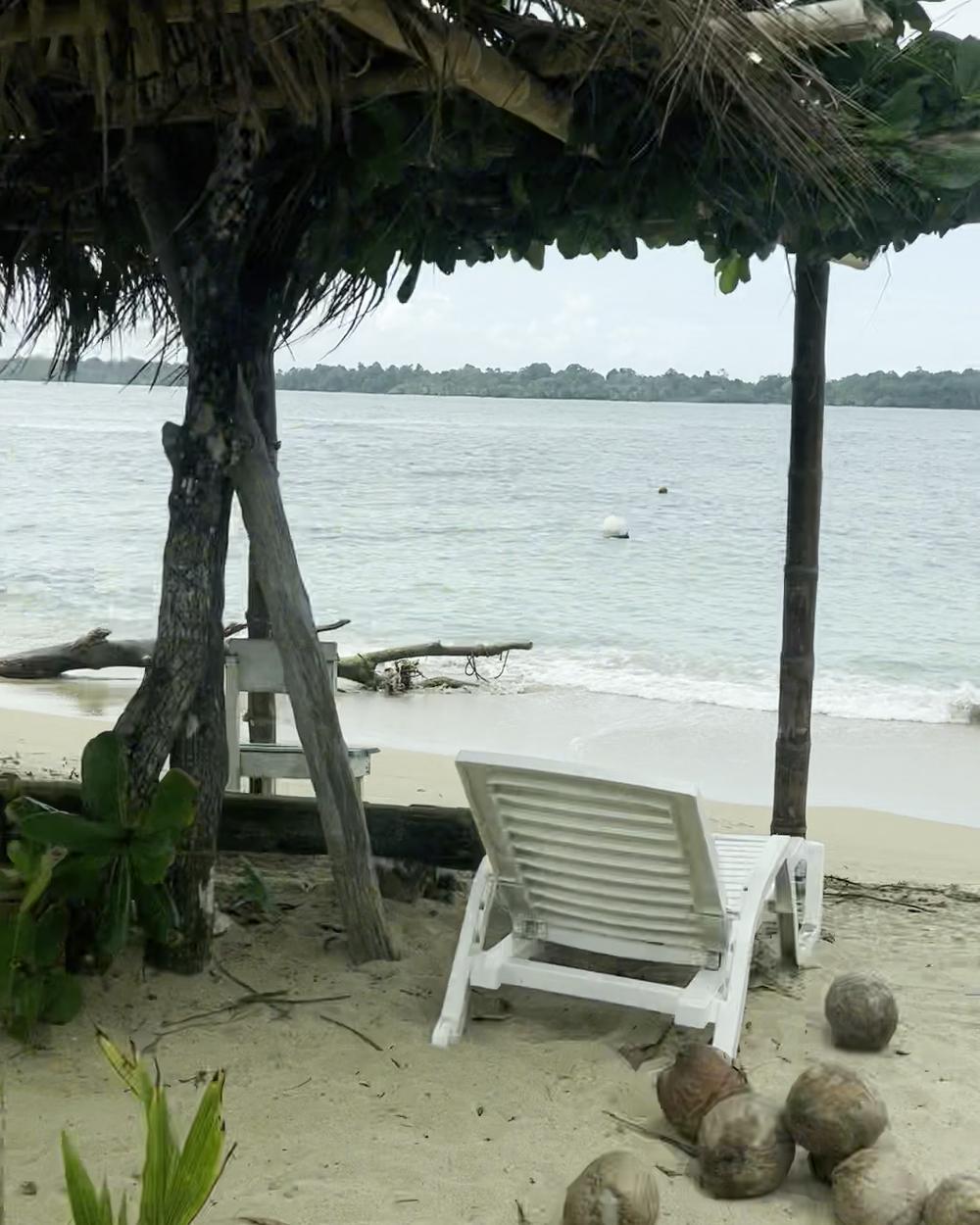
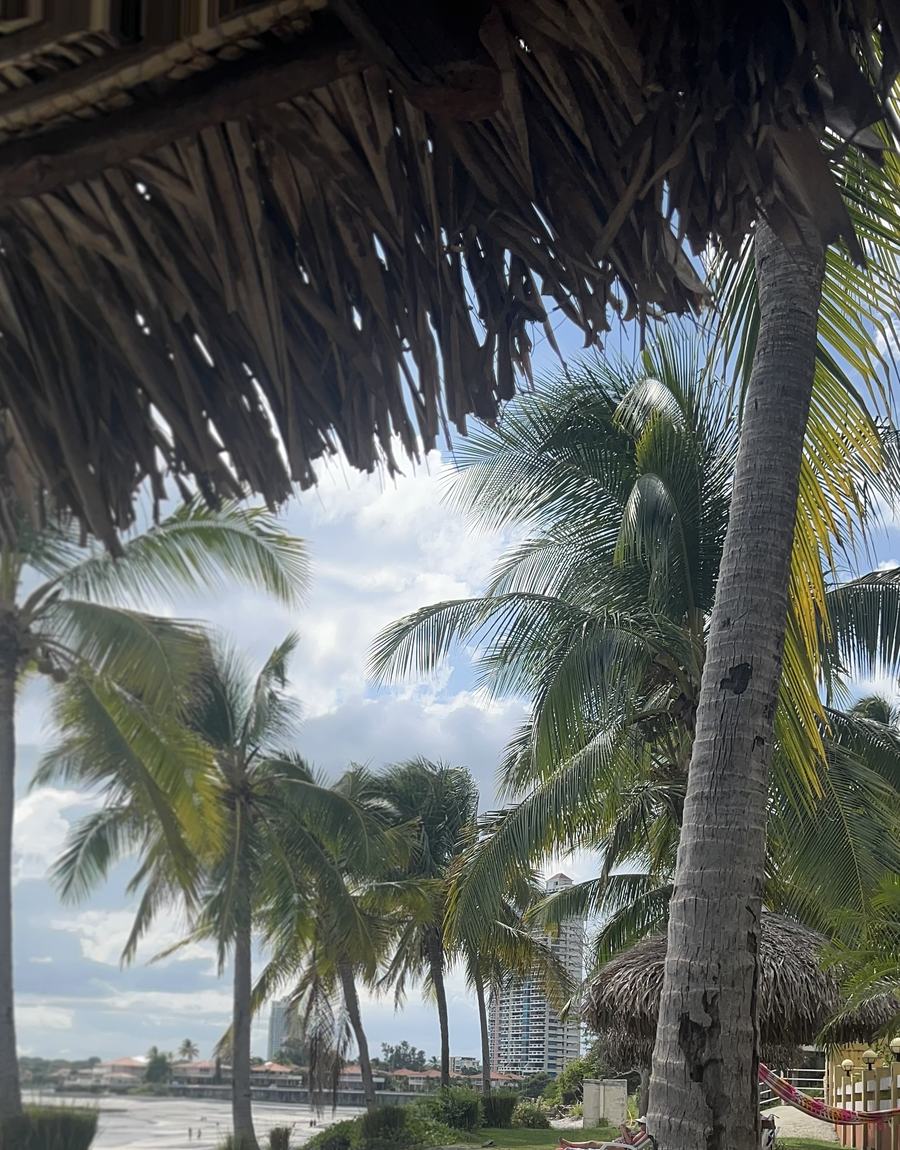
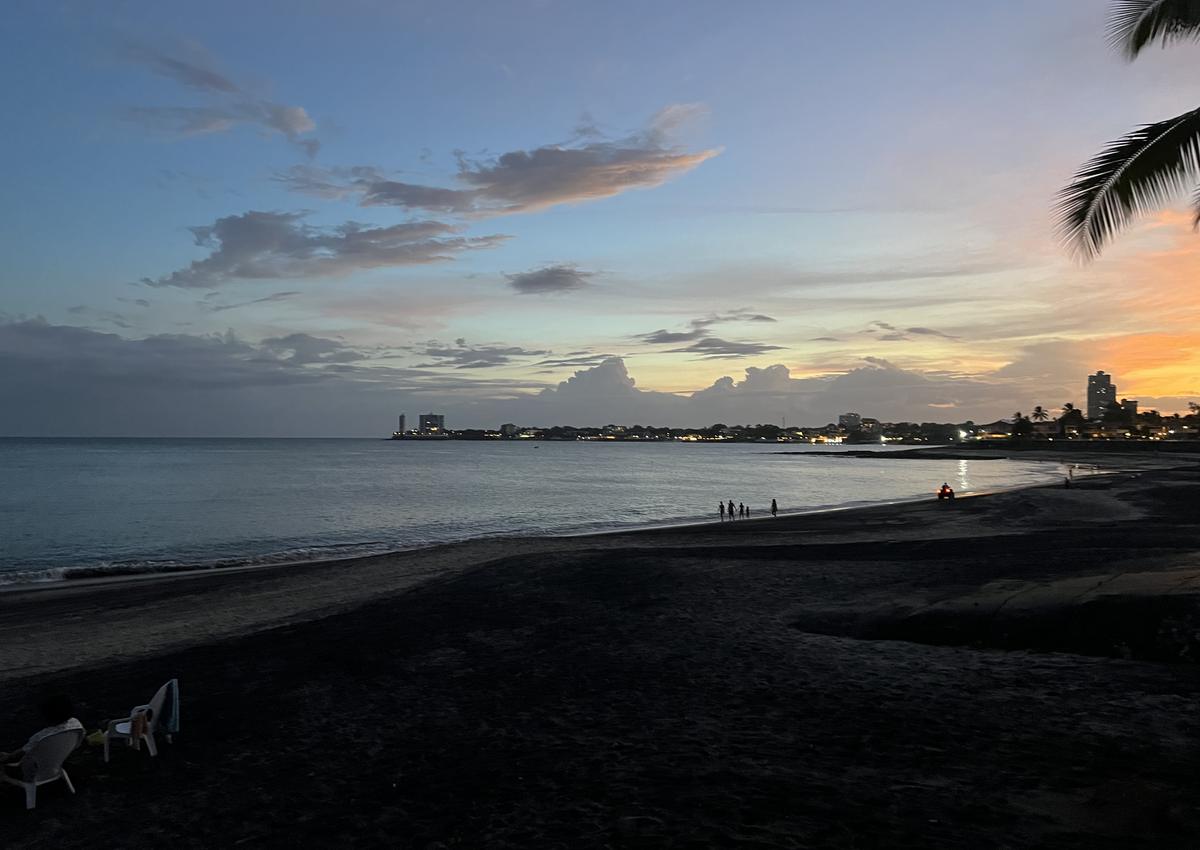
For the first month you chase them with a camera. Then a capuchin crosses the sand in front of you at six in the evening and you just watch, because it happened yesterday too and it will happen tomorrow.
Bastimentos was made Panama’s first marine park in 1988, and most of the archipelago is still forest and mangrove. The wildlife is not somewhere you drive to. It is in the garden.
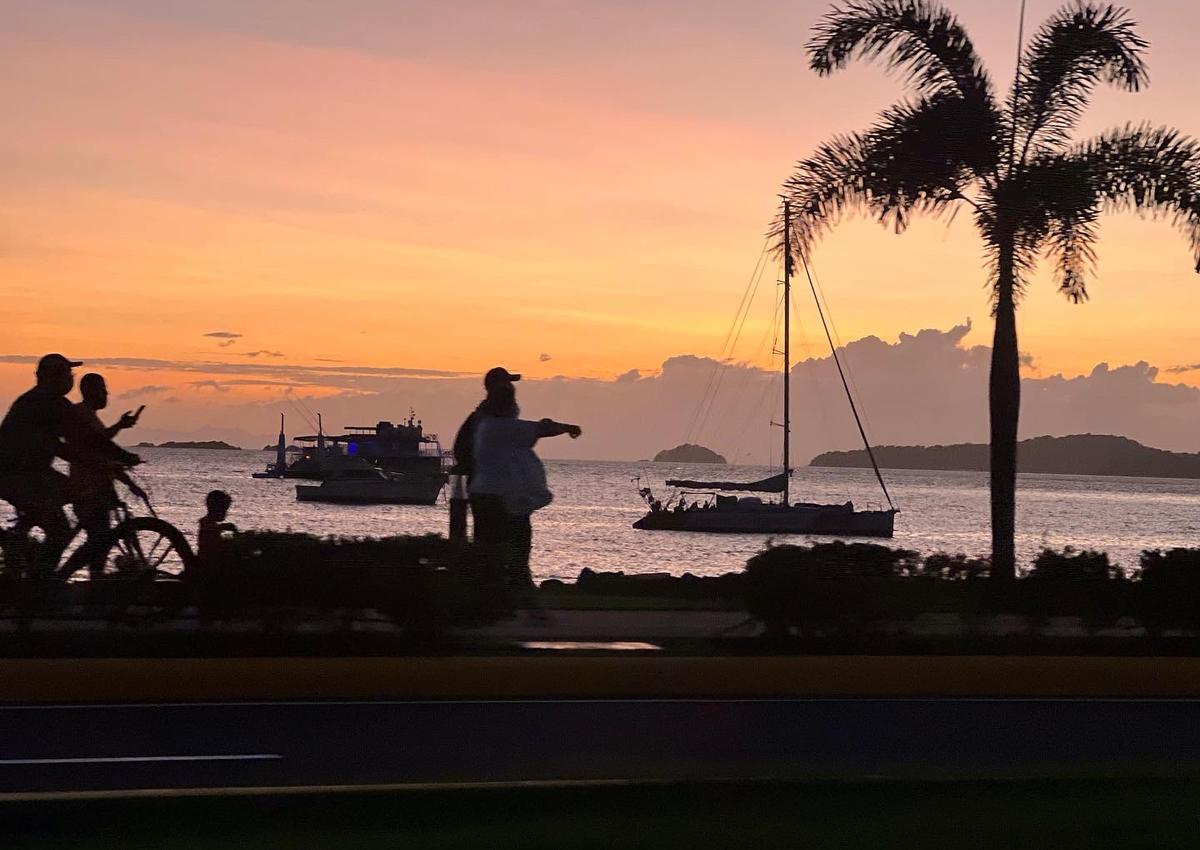
Isla Colón · six in the eveningThe dollar, a territorial tax system, an hour’s flight to a first-world capital, and a residency programme that turns a titled purchase into permanent status. Our buyers choose the country first and the island second.
Our Panamanian counsel files the Qualified Investor application alongside your closing. Citizenship eligibility follows after five years.
How it works


Buy a titled property for $300,000 or more and you can hold Panamanian permanent residency in about six weeks.
The Qualified Investor programme — inversionista calificado — was created by Executive Decree 722 of 15 October 2020 and amended by Decree 193 of 15 October 2024. It grants permanent residency immediately on approval, not a temporary permit that converts later.
It is not citizenship. Citizenship requires five years of permanent residency, then a naturalisation process of roughly two more years, conducted in Spanish and signed by the President. Any site that tells you $300,000 buys a passport is selling you something.
| Route | What it takes | What you get | How long |
|---|---|---|---|
| Qualified InvestorDecree 722 / 193 | $300,000 in titled real estate, free of liens, funds wired from abroad, held five years. May be held through a Panamanian company you own. | Permanent residency at once. Spouse and dependent children included. | 30–45 business days |
| Friendly NationsDecree 197 of 2021 | $200,000 in titled real estate, or a Panamanian employment contract. Open to citizens of the US, Canada, UK, EU and around fifty other countries. | Two years provisional, then permanent. | 3–5 months |
| PensionadoLaw 6 of 1987 | A lifetime pension of $1,000 per month. US Social Security qualifies. No purchase required. | Permanent residency plus the statutory retiree discounts. | 3–6 months |
Permanent residency in 30–45 business days.
Two years provisional, then permanent.
Independent of price — needs a $1,000 monthly lifetime pension.
Title certificate pulled from the Public Registry, survey checked against the boundary, deposit into a bank trust or attorney escrow — never a private account.
The decree requires the investment to come from outside Panama. Wiring from your home bank into escrow creates exactly the paper trail the application needs.
The escritura is executed before a notary and filed at the Registro Público. Once recorded, the Ministry of Commerce issues the investment certificate.
Filed under power of attorney, so you need not be in the country for this step. You travel once, to give biometrics and collect the card.
Thirty to forty-five business days from filing. The five-year clock toward citizenship eligibility starts here.
Immigration filings in Panama must be made by a licensed Panamanian attorney. Tell us what you are considering and we will arrange an introductory call with ours — before you choose a property, not after.
We are a licensed brokerage, not a law firm, and nothing here is legal advice. Residency rules in Panama change by executive decree; every figure on this page is checked against the Gaceta Oficial and confirmed by counsel before you rely on it.

The single most expensive mistake in Bocas is assuming that a beautiful piece of land comes with a title.
Panama recognises registered title, possessory rights, and maritime concessions. All three change hands in Bocas, often at similar prices, and the difference decides whether a bank will lend on it, whether it counts toward residency, and whether someone else can credibly claim it.
Every listing on this site carries its status on the photograph. We would rather lose a sale than let a buyer discover this at closing.
Registered in the Public Registry with its own finca number. Ownership, in the sense you already understand it.
Derecho Posesorio. A recognised right to occupy and use land the state still owns. Not registered title.
A renewable government permit to use maritime or island land. Over-water houses and docks sit on these.
| Rule | Effect in Bocas |
|---|---|
| Public RegistryRegistro Público de Panamá | Every titled property has a finca number showing owner, chain of transfers, mortgages, liens, embargoes and court orders. A certificate takes a day and costs very little. There is no equivalent record for ROP. |
| Law 2 of 2006Island and coastal land | Opened island property to foreign buyers and set the framework for titling coastal and island land. It also caps foreign ownership at no more than half of any single island. |
| Law 23 of 2009Insular territory | Declared island territory a special development area and regulates how coastal-zone parcels are adjudicated. ANATI administers the titling process. |
| The 10-kilometre ruleConstitutional | Foreigners may not own land within 10 km of the Costa Rica or Colombia borders. This touches parts of the Changuinola–Sixaola corridor on the mainland. It does not affect the islands. |
| Holding structureS.A. or personal | Foreigners may own personally or through a Panamanian corporation. A company simplifies resale, estate planning and the residency filing, and costs around $1,500–$2,500 to form plus a few hundred a year to maintain. |
Sometimes. ANATI runs a titling process for possessory land, and parcels in Bocas have gone through it. But it is measured in years rather than months, it requires a clean survey and no competing claimants, and it can fail.
Buy ROP on the assumption it will stay ROP. If it titles later, treat that as upside rather than the basis of the price you pay. Two practical protections: write the contract as a price per square metre so the figure adjusts to the surveyed area, and never let a deposit leave escrow before the survey and the municipal or ANATI records have been checked on the ground.
ROP is not a trap — a great deal of Bocas has changed hands this way for decades. It is simply a different asset, and it should be priced as one.
Sixty-three per cent of our register is titled. Eighteen properties are both titled and priced at or above the $300,000 Qualified Investor threshold.

The only island with roads, an airport and mains water — and therefore the only one where most people can live without a boat.
Isla Colón is about 61 km². Bocas Town sits on the south-east tip; a single road runs north to the surf beaches and west across the island to Boca del Drago. Everything else is jungle, mangrove and small farms.
It carries the archipelago’s infrastructure, which is why it also carries the most inventory and the highest prices per square metre.
The commercial centre: restaurants, dive shops, hostels, the water-taxi docks. Condos from about $150,000 and most of the commercial stock. Loud on Calle 1ra and 3ra at weekends; sewer capacity is the weak point.
Long surf beach on the north shore, 20 minutes by road. Some of the few titled beachfront parcels on the island. Turtles nest on the sand between March and September, which limits what can be built at the beach line.
Between town and Bluff. The reliable surf break, a handful of ocean-view homes on the ridge, and the point where the proposed coastal road would begin.
Inland and to the west, on the road. Larger lots, road frontage, power at the line. Where buyers go when the beach is out of budget but they still want to drive home.
The far west end, 25 minutes out: calm water, Starfish Beach, larger acreage and much of the island’s remaining ROP land. Also where the airport authority bought its expansion land.
On the national grid since May 2023, when a 44 km submarine cable from Almirante replaced the island’s diesel generators — a roughly $30 million project. Outages still happen; most serious houses keep a small generator or a solar array.
The IDAAN mains reach Bocas Town and the road corridor, but supply is intermittent and the island has been under a water emergency more than once. Nearly every property outside town has rainwater catchment and a tank, and you should budget for one.
Isla Colón airport is roughly an hour from Panama City by regional turboprop. The overland route is seven hours plus to Almirante and then a water taxi — and that road is the single point of failure: it was blocked for six weeks in 2025.
The airport is being rebuilt. In January 2026 a first $3 million phase funded fencing, approach lighting and taxiway work; the main $25 million contract for a new terminal and a wider runway went out to bid with offers due 24 September 2026, on a 24-month build. Nothing opens before 2029 on that schedule, and Panamanian public works tend to slip — so treat it as a medium-term catalyst, not a reason to overpay today.
An $80 million-plus rehabilitation of the island’s roads was approved in 2023, with a 17 km coastal bypass to Drago as a second phase. Through 2026 the visible work has been maintenance rather than the full rebuild. Assume the road you drive on today is the road you will drive on for a while.


Every island in the archipelago is a different purchase. Roads on one, grid power on three, titled land common on some and rare on others. Start with the one that fits how you want to live.


| Island | Minutes from Bocas Town | Power | Water | Titled land | Who it suits |
|---|---|---|---|---|---|
| Isla Colón61 km² | 0–25 by road | National grid since 2023 | IDAAN mains in town, intermittent; tanks elsewhere | Common | Anyone who wants a car, a hospital and a flight nearby |
| Carenero0.9 km² | 2–3 | Grid, by submarine line | Rain catchment | Common | Town access without town noise; surfers |
| Solarte8 km² | 5–10 | Off-grid: solar | Rain and wells | Common for the archipelago | Quiet, close, self-sufficient |
| Bastimentos62 km² | 10–35 | Grid at Old Bank; solar beyond | Rain catchment | Rare outside Old Bank and Red Frog | Beaches, the marine park, a village with a history |
| Cristóbal37 km² | 10–30 | Off-grid: solar | Rain catchment | Rare | Acreage, cacao, dolphins, real distance |
| Popa53 km² | 35–45 | Off-grid: solar | Rain catchment | Mixed | Large parcels at the far end of the map |

The biggest island, the best beaches, and a village older than the town across the water. Most of it is national park, and most of what is for sale is Rights of Possession.
Bastimentos is about 62 km², the largest island in the archipelago, and it has no roads. Old Bank sits on the west tip facing Bocas Town; the north coast is a run of surf beaches — Wizard, Red Frog, Polo, Playa Larga — and the south and east are mangrove, Ngäbe villages and the marine park. A footpath crosses from Old Bank to Wizard Beach in about twenty minutes.
Isla Bastimentos National Marine Park was created in 1988 and covers roughly 13,000 hectares of the island and the sea around it, including the Zapatilla cays and the turtle beaches at Playa Larga. Nothing inside the park boundary is for sale, whatever a listing says.
Afro-Caribbean village of a few hundred people, one concrete walkway, no cars, Guari-Guari spoken as much as Spanish. Over-water homes and small guesthouses, several of them titled. Music at weekends carries across the water.
A 1,500-acre private development on the north coast with its own roads, marina and power, and the only place on the island where titled lots and finished villas come to market in numbers. Villas in the high $500,000s; lots from about $190,000.
Sheltered bay on the south side; a Ngäbe community of around thirty families, a school, and a handful of off-grid lodges. Calm water, no beach, and land that is almost entirely ROP.
The far south-east, on the edge of the park: a Ngäbe village of about sixty houses. Rarely for sale, and anything that is needs a lawyer who knows comarca land.
Old Bank and Bahía Roja have had grid power by submarine line from Isla Colón since the utility ran it in 2015, and Colón itself joined the national grid in 2023. Red Frog runs its own system. Everywhere else is solar, and a buyer should price a proper array and batteries into any off-grid parcel.
Rain catchment and tanks. There is no mains supply outside Old Bank’s small local system, and even there most houses keep a tank. It rains enough that this works; the tank size is what matters.
Red Frog and Wizard are the beaches people come to Bocas for. Both have strong rip currents and have taken lives; there is no lifeguard outside the Red Frog resort. The red frogs themselves — Oophaga pumilio, thumbnail-sized — are on the path behind the beach.
The trail between Old Bank and Wizard Beach has had armed robberies. Walk it in daylight and in company, and treat a caretaker as part of the cost of any house that will stand empty. This is the one island where we say that plainly.

Two minutes from the dock and a world quieter. A small island with grid power, titled land, a surf break at the point — and the archipelago’s worst sandflies.
Carenero is under one square kilometre, a few hundred metres across the channel from Bocas Town. Columbus is said to have careened his ships here in 1502, which is where the name comes from. A footpath circles the island in an hour or two; there are no roads and no vehicles.
The west and south shores face town and hold most of the houses, restaurants and over-water bars. The north end is breezier, has the surf, and is where most buyers end up wanting to be. The middle is low and swampy, which is the sandfly problem in one sentence.
The strip facing Bocas: over-water restaurants, a hostel or two, small titled houses and rentals. You can see your dinner reservation from the porch. Bar noise carries at weekends.
The north tip and the surf break, from beginner-friendly inside to a proper wave on a north swell. Large surf-front lots have sold here in the $165,000 range; the reef in front limits what can be built at the water.
Faces Solarte across calm water. Fewer houses, more mangrove, a couple of concessions for over-water builds. Where the quieter titled lots are.
Carenero was the first of the outer islands to get grid electricity, by submarine line from Colón in 2015. Listings advertise “city power” and mean it. Outages track Colón’s.
Rain catchment and tanks, as everywhere outside Bocas Town. The island is small enough that a delivery by boat is a phone call away in a dry spell.
The island’s reputation, and it is earned. No-see-ums breed in the wet interior and are worst at dawn and dusk in still air. The north end, with wind, is markedly better; screens, fans and a raised house are the standard defence. Visit at six in the evening before you buy.
There are no large parcels left. What comes up is small houses, rental-oriented cottages, over-water structures on concession, and the occasional beachfront pair of lots. It moves quickly.

Nancy’s Cay to the old settlers. Eight square kilometres of forest a short ride east of town, no grid, no roads, and more titled land than an island this quiet has any right to.
Solarte is about 8 km², a long ridge of secondary forest running east from a point a mile off Bocas Town. The west tip carries the island’s one village and Hospital Point, where the United Fruit Company built a yellow-fever hospital in 1900 and abandoned it for Almirante twenty years later. The wall in front of the point drops to fifteen metres and is the best casual snorkel in the archipelago.
Part of the island was platted for an eco-community that never finished. Its trails remain and its lots resurface at low prices — one reason Solarte has titled land where its neighbours mostly do not.
The village at the west end: thirty-odd houses, a school, a church and a football pitch, a Ngöbe fishing community of a couple of hundred people. Not a market, but the neighbours you will have.
The north-west shore around the old hospital site. Deep water at the dock, the snorkel wall, a handful of lodges and off-grid homes. The most sought-after stretch on the island.
Facing Bastimentos across the channel: calm water, sunrise side, larger titled parcels on the hill and the old eco-community lots. Where the value is.
None from the grid. Every house runs solar with batteries, and most keep a small generator for the wet-season weeks. A serious array for a two-bedroom house is $15,000 to $25,000 installed, and it should be in your budget from the first conversation.
Rain catchment, and wells in the village. No mains. Solarte gets the same rain as everywhere else, so a 10,000-litre tank on a normal roof is comfortable year-round.
By boat, and on foot along the old trails. There is no path all the way round the island; a property on the south shore is reached from the water or not at all. Budget for a boat, a dock and a reliable outboard as part of the purchase, not as an afterthought.
People who want to be ten minutes from a restaurant and a hardware store but not hear either. The lodges here fill with guests who came for the quiet; owners tend to be the same kind of person.

Cacao farms, a bay full of dolphins, and the first island where the price per hectare drops. Almost all of it is Rights of Possession, and all of it is off the grid.
Cristóbal is 37 km² of low hills south-west of Bocas Town, much of it cleared over the last century for cattle and cacao. The north shore faces Almirante Bay and is ten minutes from town; the east side wraps around Laguna Bocatorito, better known as Dolphin Bay, where a resident group of bottlenose dolphins lives year-round.
This is the island where the archipelago stops being a resort and starts being countryside. Ngäbe communities, working chocolate farms, a few eco-lodges, and parcels measured in hectares rather than square metres.
The Almirante Bay side, closest to town. A cluster of off-grid homes and rentals built by foreigners over the last fifteen years; where most Cristóbal sales happen.
The sheltered lagoon on the east side. Two established B&B lodges, a chocolate farm that ships abroad, and glassy water. The dolphins are protected in theory; boat strikes have killed several, and buyers here tend to feel responsible for that.
Pasture and cacao. Large ROP fincas that occasionally come to market whole, at prices that look wrong next to Colón. They are right for what they are: land with no services, reached by a track.
Solar. There is no grid on Cristóbal and no plan for one; the houses here were designed around it from the start, which is why they tend to be better built for the climate than newer ones on Colón.
Rain catchment. The island has streams, but a house runs on its roof and tank like everywhere else out here.
Assume ROP unless a finca number is produced. A few titled parcels exist on the north shore. On the rest, the survey is the transaction: boundaries on old pasture are approximate, neighbours’ memories differ, and the price should be written per hectare against what the surveyor finds.
Buyers who want land, not a lot; who will run a farm, a lodge or a very private house; and who are fine with a half-hour ride for groceries. It is the wrong island for a rental investment.

The second-largest island and the furthest from the dock. Two white-sand beaches facing the Zapatillas, forest and streams behind them, and land sold by the hectare with both kinds of title.
Popa is 53 km², separated from the mainland by a channel less than 200 metres wide, with Dolphin Bay and the Tierra Oscura shore to its west. It is low — nothing above 100 metres — cut by ravines with permanent streams, ringed with mangrove, and mostly forest with plantain and banana plots near the villages on the north side.
The north-east tip, Punta Laurel, looks straight out at the Zapatilla cays and holds the island’s beaches and its one resort. That corner is where nearly all the foreign-owned land is.
The beaches, the resort, the view of the Zapatillas. Titled waterfront with docks has sold here at around $150,000 a hectare; the parcels are large and the buyers are few.
Oceanfront ROP acreage in the tens of hectares at prices in the low six figures. Access by boat only, then a track. Sold to people building a lodge or a family compound, not a weekend house.
Ngäbe communities on the north shore. A solar-powered rain-catchment water station was installed at Popa Uno in 2022 by two local foundations, which tells you what the infrastructure baseline is.
Solar and rain, without exception. The distance from town means a generator and fuel storage are not optional, and a Starlink dish is how the internet arrives.
Forty minutes from Bocas Town in a fast boat on a calm day; longer, and wet, when it is not. Some owners run from the Tierra Oscura side or from Almirante instead. Whatever the listing says, make the trip yourself in the afternoon chop before you decide.
Unusually for an outer island, Popa has a real mix. Titled parcels at Punta Laurel trade alongside ROP tracts on the north tip, often at similar per-hectare prices. Pay for the title if you can get it; it is the difference between a residency-eligible purchase and one that is not.
A lodge, a conservation project, a family that wants a beach to itself. Buyers who need to be somewhere by nine on a weekday should look at Colón.

One WhatsApp number, one inbox, and the people behind them. We reply within a business day, in English or Spanish, and we say when we don’t know something.
Fastest. Voice notes welcome; we’ll call you back on it.
For documents, long questions, and anything you want on paper.
Eastern Standard year-round, no daylight saving. Boats run in daylight; so do showings.
We meet at the dock or at your hotel. Two-day Fly & Buy showings by arrangement.

President of a construction and property company in Louisville, Kentucky, founded in 1986. Handles buyers from first message to closing, and reads every survey himself.

Bio to come.
Bio to come.

Bio to come.
We only contact you about your enquiry and Bocas. No lists, no forwarding your details to anyone.

List it yourself for nothing, or hand it to a licensed brokerage. Both start on the same page.
There is no MLS in Bocas del Toro. The same house appears on four agency websites at four different prices, and buyers cannot tell what is still available. We publish one register, we verify title before we list, and we say when something has sold.
Sales are handled by our licensed Panamanian broker — licencia de corredor de bienes raíces No. ——. Panama requires that licence to earn a commission on a sale, and we display the number because our competitors do not.
Serious buyers get two days of showings across three islands with the broker and an introduction to our attorney. $1,200, credited in full against the commission if you buy through us.
Free, and you keep control of enquiries. Tell us what you have and we will come back with the title check and a suggested price range within three business days.
Not certain whether your land is titled? Say so. Establishing that is the first thing we do, and it costs you nothing.

Most sites selling Bocas show you the water. Here is what the water does not tell you.
Bocas draws a younger crowd than Boquete or Coronado: remote workers, surfers, divers, restaurant owners, and a smaller cohort of retirees. The population is more transient and seasonal than settled. People arrive for a season and stay for a decade, or arrive for a decade and leave in a season.
A couple lives comfortably on roughly $1,800–$3,000 a month, which is more than mainland Panama and less than most of the Caribbean. Almost everything except fish and fruit arrives by boat, and the price reflects it.
Mains supply is intermittent and the province has been under water emergencies. Every house outside town needs catchment and storage. Sewage capacity in Bocas Town is inadequate and overflow onto Calle 1ra has been reported in the local press.
Wet most of the year, heaviest September to December. Expect mould, rust and constant maintenance on anything wooden or metal. Building costs run higher than the mainland for the same reason.
There is a small hospital in Bocas Town for routine care. Anything serious means David — over an hour by boat and road — or a flight to Panama City. Most expats carry evacuation cover.
The overland route runs through Almirante and Changuinola. When it closes, the archipelago is cut off except by air. This is not theoretical: it happened for six weeks in 2025.
Bocas is not dangerous by regional standards, but opportunistic theft from unoccupied houses and boats is common. Caretakers are normal and expected, not paranoid.
Short-term rental data for the archipelago shows occupancy between 32% and 51% depending on the source, an average daily rate around $130–$160, and per-listing revenue down about 9% year on year. Broker-quoted gross yields of 5–8% describe well-managed properties, not the average one.
You will find it if you research the region, so we would rather you found it here first.
On 28 April 2025 banana workers struck over pension reform. Roadblocks closed the corridor through Changuinola and Almirante; a state of emergency was declared in late May. Hotel bookings in Bocas fell by up to 60%, occupancy dropped to around 20%, ferries and tours stopped, and there were more than 300 arrests. The roads reopened on 12 June.
Chiquita shut its Changuinola operation, laid off more than 6,500 workers and reported over $75 million in losses. Bananas are roughly 80% of the provincial economy. The company agreed to return in August 2025 with a $30 million reinvestment and up to 5,000 jobs; about 2,300 workers were back by April 2026 and exports resumed by mid-2026.
By 2026 Bocas was reporting the highest hotel occupancy of any region in Panama at 70.4%. Read that number carefully: it is measured against a wrecked 2025, and the national hotel survey expanded from 53 to 146 properties in July 2025, so it is not a clean year-on-year comparison. The recovery is real. Its size is not yet knowable.
None of the above is why people stay.
They stay because it is the cheapest warm-water Caribbean waterfront left in the hemisphere, because the reef is twenty metres from the dock, because the town is small enough that the boat captains know your name, and because a country that taxes only local income sits an hour’s flight from a first-world capital.
They stay because howler monkeys come down the beach at six, and after a while you stop photographing them.

Panama has no title insurance and no escrow company on every corner. The protection is procedural, and it has to be built into the deal.
A fixed-price service that runs the legal side of a Bocas purchase end to end, with an independent Panamanian attorney — not the seller’s, not the developer’s.
Before any deposit. Panamanian closings run through a lawyer and a notary, not a title company. Never let one attorney act for both sides.
Owner, chain of transfers, mortgages, liens, embargoes, court orders. If there is no finca number, the land is not titled and this is a different transaction.
Area discrepancies are routine on rural and possessory land. We write the contract as a price per square metre so the figure adjusts to what the surveyor actually finds.
The promesa de compraventa sets a due-diligence window and your right to walk. Deposit is typically 10%.
Held by a bank trust department or a lawyer’s escrow account, with written release conditions tied to registration. This is the step that goes wrong when it is skipped.
The escritura is signed before a notary and filed at the Registro Público. Ownership is perfected when the registry records it — not when the money moves. Final funds release against the registry receipt.
Property tax account transferred, condominium dues confirmed, power and water accounts moved, caretaker introduced.
Panama uses the US dollar, so there is no currency risk. There is also no deposit insurance and no central bank — if a Panamanian bank fails, depositors are creditors. Keep purchase funds in the country only as long as the closing takes, and wire from your home bank directly into escrow. That also produces the “funds from abroad” trail the residency application requires.
Send us a property you are considering — ours or anyone else’s — and we will come back with the registry certificate and a plain-English summary of what it says.
We are a licensed brokerage, not a law firm. The legal work is performed by our independent Panamanian counsel, who is named in your engagement letter before you pay anything.